As Women’s Health and Osteoporosis Awareness Month shines a spotlight on longevity, mobility, and quality of life this May, many female riders are taking a closer look at what it truly means to stay strong, supple, and confident in the saddle as they age.
For many dedicated dressage riders, the advice has been repeated for years: Engage your core. Sit up straight. Hold yourself taller. Get stronger.
And yet many riders — especially women over 50 — quietly find themselves feeling stiffer, more fatigued, and less fluid in the saddle despite being deeply committed to fitness, stretching, strength training, and overall wellness.
These are not riders who have “let themselves go.” They are disciplined, educated, and highly motivated horsewomen who are often doing everything they’ve been told should help. Yet many still find themselves trying harder and harder to “hold” good posture, only to lose the natural suppleness, elasticity, and youthful ease they once felt in the saddle. Some even begin wondering why riding suddenly feels more difficult than it once did.
DTM Skeletal Strength Course
Dave Thind believes the answer may surprise them.
“There is such a thing as too much of a good thing,” explained Thind. “Many riders are unknowingly overusing muscular effort in an attempt to create stability. But true stability doesn’t come from bracing. When riders learn how to organize themselves through the skeleton instead of tension, they often feel stronger, lighter, and more secure almost immediately.”
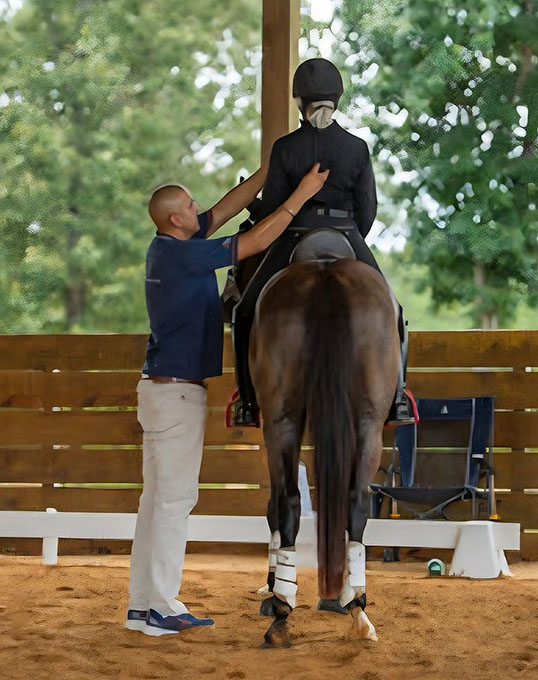
The approach has been embraced by a wide range of riders and professionals — including medical doctors, veterinarians, researchers, adult amateurs, Olympic riders, Olympic medallists, and international team trainers — many of whom are seeking more intelligent, sustainable ways to improve rider function, longevity, and harmony with the horse.
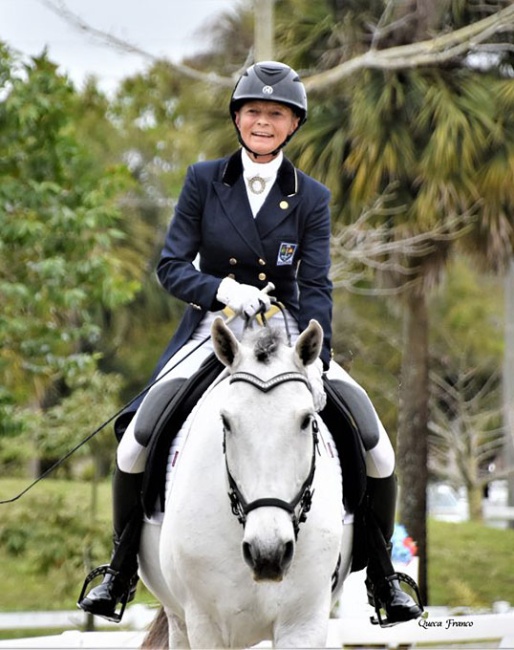
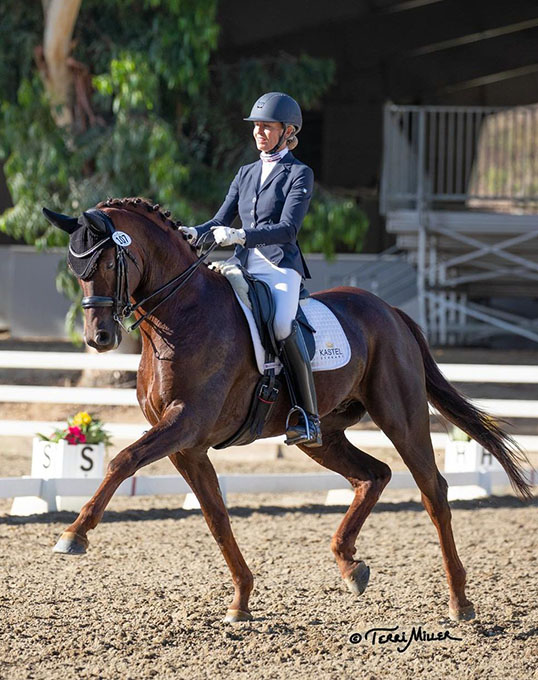
The work has also earned praise from renowned equine biomechanics expert and veterinarian Dr. Hilary Clayton (pictured at the top on her horse Donzo), who participated in the live in-person version of the DTM Skeletal Strength Course in Wellington, Florida.
“Dave’s classes are interesting, informative and FUN. Each class brings a new level of self-awareness in the saddle and provides us with tools to ride better — what’s not to like about that?” said Clayton after completing the course. She also emphasized the importance of the DTM focus on pelvic organization and coordination in riding. “I love the DTM focus on the pelvis, which research shows is the key to riding success. His lessons will help all of us reach our full potential in the saddle.”
Coordination, Balance, Skeletal support
Instead of relying on rigid posture or excessive muscular effort, the course helps riders discover how efficient movement and skeletal organization can create a greater sense of effortless support.
The DTM approach emphasizes coordination, balance, skeletal support, and efficient movement patterns — helping riders feel stronger, more stable, and more supple without unnecessary tension.
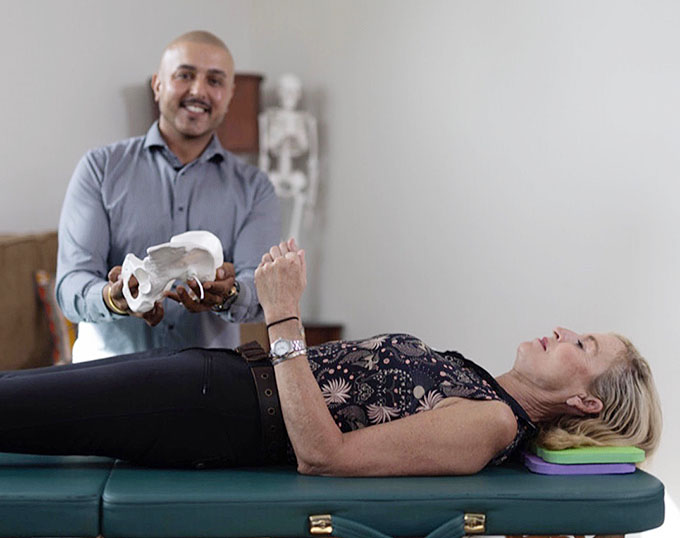
For many women over 50, the experience can feel surprisingly emotional. Not because they are chasing youth — but because they rediscover sensations they thought were behind them:
Fluidity.
Freedom.
Security in the saddle.
Trust in their bodies again.
Many riders describe feeling lighter, springier, and less compressed both in and out of the saddle. Some riders even report feeling taller, less compressed, and more comfortable in their bodies after lessons, while noticing immediate improvements in riding comfort and ease of movement.
For many riders, the work also brings peace of mind. As conversations around women’s health and bone density become increasingly relevant with age — particularly as studies suggest 1 in 3 women over 50 will experience osteoporotic fractures in their lifetime — riders appreciate an intelligent, rider-specific approach to improving stability, posture, coordination, and skeletal support.
Bones for Life
International Grand Prix rider Charlotte Jorst has become one of the strongest advocates for the work. Known for her commitment to lifelong learning and empowering women in sport, Jorst credits DTM with profoundly changing both her riding and body awareness.
“DTM Feldenkrais has done wonders for me,” said Jorst. “It feels like it does nothing, but it’s created an awareness of what I do, the muscles I use and the impact it has on a horse. It’s amazing.”
Jorst also shared that before beginning DTM, she constantly worked hard to sit up straight while riding and was unknowingly fighting against her own body mechanics. Through consistent practice, she discovered greater ease, comfort, and self-awareness — changes that translated directly into her riding.
On-Demand Access, Worldwide Benefit
The emotional impact of the work is something riders mention repeatedly. “My horse thanks you for the positive changes in my riding,” shared rider Kerry S. “I've become softer, and been able to get out of my head and let my body respond to the movement felt underneath me.”
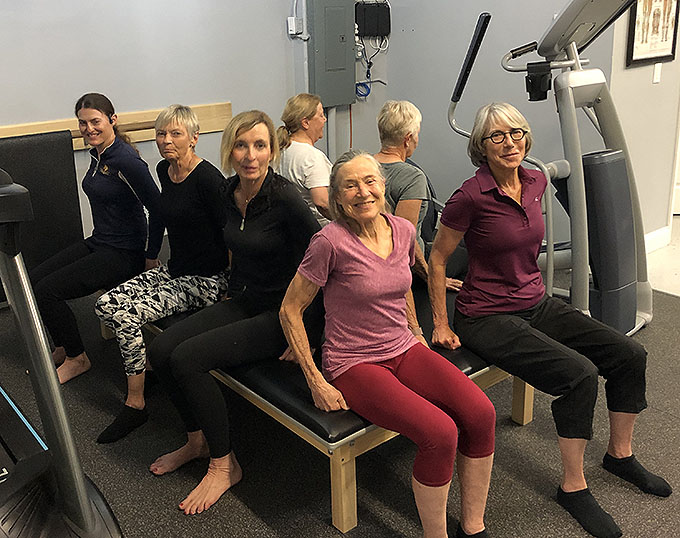
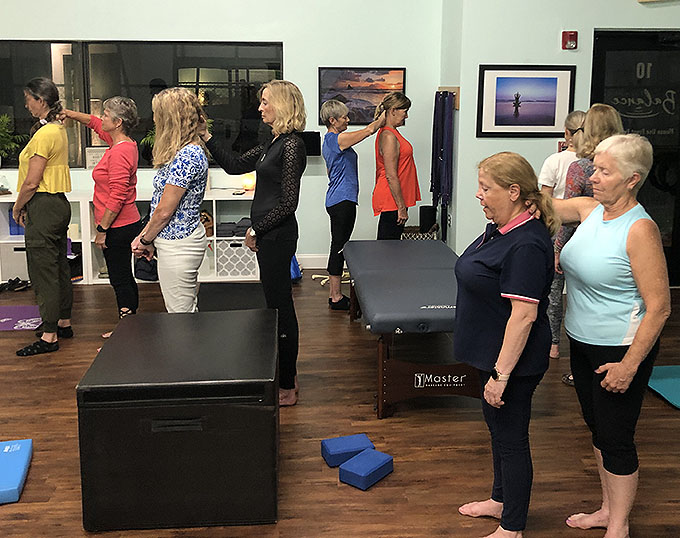
a Dave Thind group lesson in Wellington, FL
Other riders describe feeling more grounded, freer in their movement, and more connected to their bodies and horses.
-
“Feeling the freedom to move. Not being in a stiff perceived position.” — Erin
-
“The feeling of being more grounded, centered and strong is incredible.” — Christine G.
-
“Connecting the parts together. Learning how each half of me is different.” — Karen A.
-
“More connected to my whole body.” — KristinAnn J.
-
“I recently rode in a clinic and got a compliment that I had a ‘good seat’!!! I really never considered myself to have a good seat. Kudos to you!!” — Deborah T.
“There’s this belief that struggling is simply part of getting older,” explained Thind. “But riding can feel easier. Your body can feel safer, more capable, and more alive. Often the change begins with awareness, not force.”
Ride Better. Move Smarter. Age Gracefully
As part of a special Women’s Health and Osteoporosis Awareness Month invitation, the DTM Skeletal Strength Course is currently available for $299 USD through May, a savings of $80 off the regular course tuition.
Registration during May also includes access to a special live online webinar with Dave Thind taking place this June, where riders will have the opportunity to deepen their understanding of rider biomechanics, skeletal health, and harmonious movement in the saddle. Previous DTM Skeletal Strength participants will also be invited to attend.