-- Text and photos © Silke Rottermann - no reproduction without permission
(This article expresses Silke Rottermann’s eye-witness account and opinion about the competition)
The days here at Eurodressage headquarters in Belgium, a mere 60 kilometers from the showgrounds in Aachen, pretty much got into a certain routine.
The alarm rang at 5:30 o’clock, a quick shower, I tiptoed downstairs not to wake the editor-in-chief, who is sleeping the sleep of the blessed after a week-long dressage marathon in Aachen. After a quick breakfast, I set off through Belgium and the Netherlands until I reached the German border, where all cars always lose a few minutes because there are border checks in a parking lot.
I skipped the press parking lot, about a 20-minute walk from the Soers if no shuttle is immediately running, to save time, and since I always arrived in Aachen early, I could still find a spot in a nearby parking garage, even if I had to pay 20 euro a day for it.
Welcome Home
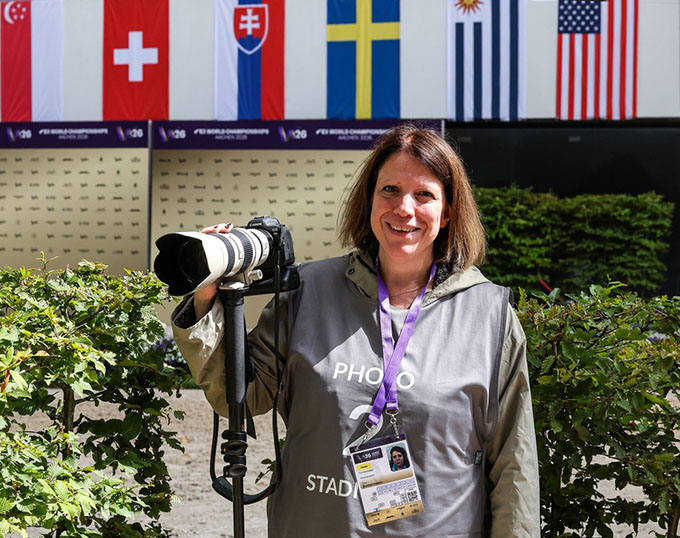
(Photo © Rebecca Thamm)
I usually skipped the trip to the press center in the main stadium and grabbed a latte at the stand behind the dressage stadium. That saved time and gave me a chance to chat briefly with the (comparatively few) colleagues who’ve also made it to the dressage stadium, early in the morning.
Interest in para-dressage is certainly much greater now than it was in the early days or even a few years ago. However, I haven’t spotted hordes of photographers or even many specialized journalists during para week. By the second day of competition at the latest, I knew which photographer was rushing into the stadium for which rider. Most of them covered all the disciplines their country were competing in and covered kilometers in the process, rushing from stadium to stadium (three in total).
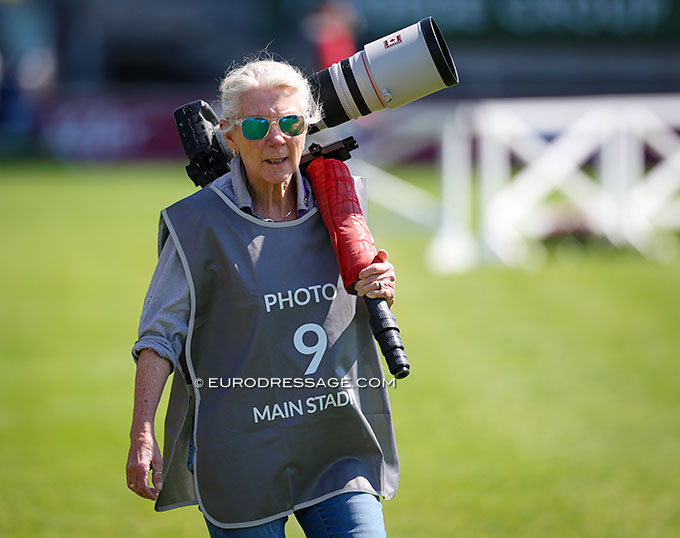
Speaking of photographers. The first day got off to a bit of a rocky start, because we’re told not to stand on the wooden platform between the tribunes and the bleachers, as it was reserved for wheelchair-bound spectators. The rest of the arena, without the platform, was so low, though, that short people like me would need a taller stool to get decent photos. But hey, I am German after all, so I know: rules are rules and need to be kept.
Rules Are Rules
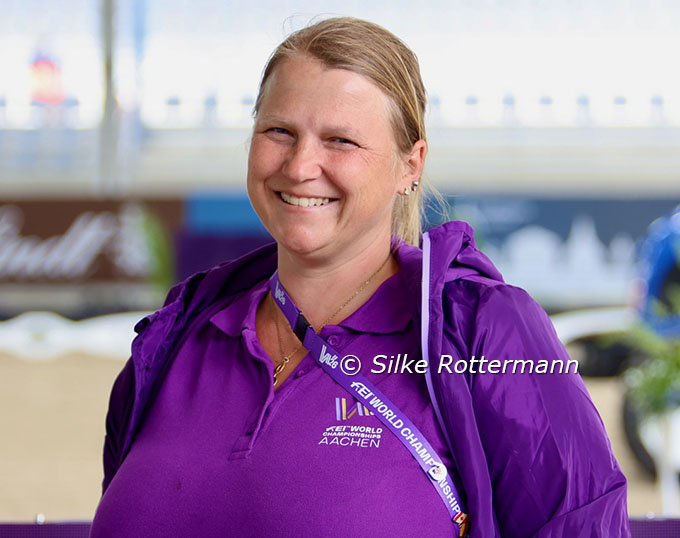
The view from the wheelchair section was pretty good, you could see a large part of the arena, as well as the exit area with the Kiss & Cry section; I could quickly run over to the warm-up area behind it or just turned back toward the cheering fans in the stands.
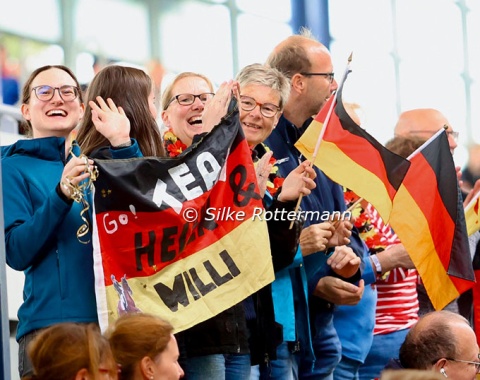
Speaking of which: Although they visually get lost in the vast expanse of the Allianz Arena (formerly known as the Deutsche Bank Stadium but the bank sponsor changed) and were mainly seated in the stands to the left of the entrance, they make such a racket, over all on the second day of the team competition, when Grade IV and Grade V ridden, that you get the feeling there are thousands of them cheering.
Battle Cries
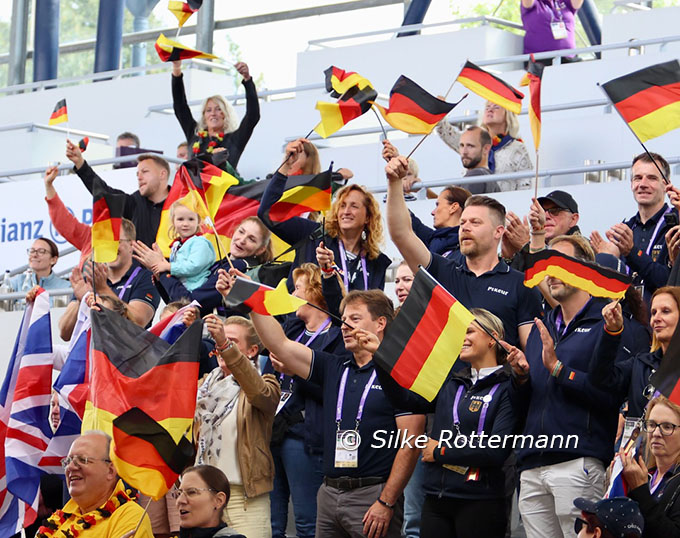
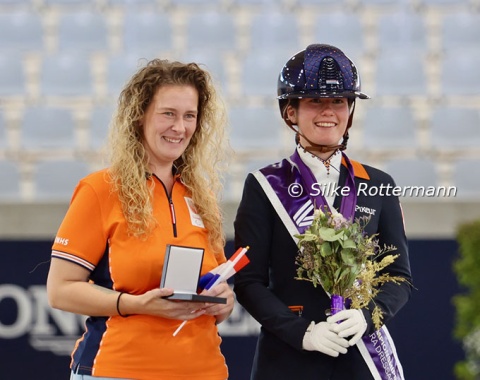
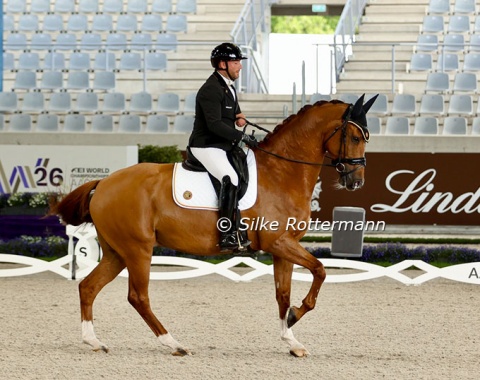
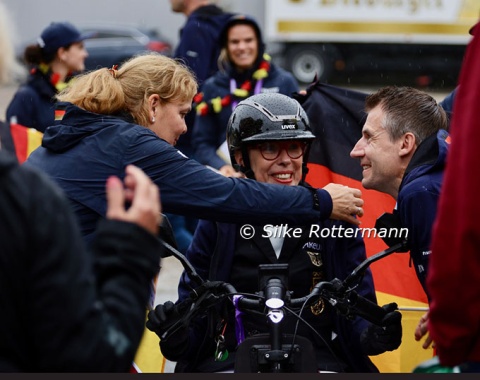
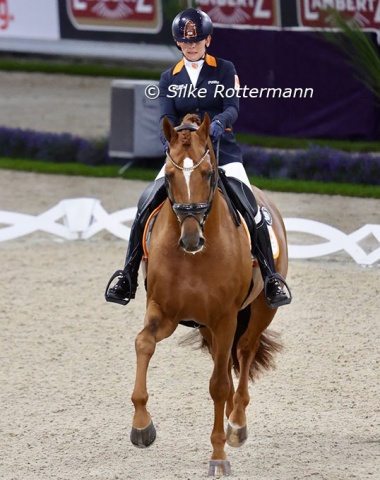
The Germans seem to have created their very own battle cry, which goes something like this: 1, 2, 3—TEAM! However, it remains a mystery to me right up until the end what exactly they're trying to convey with that. I should have asked... You hear it especially when Germans climbed onto the purple podium during the medal ceremony, and that happened with remarkable regularity during the Aachen Days. In Grades 2, 4, and 5, where they competed, one of them always took home an individual medal, in fact each of the team riders medalled individually, and the team won silver on top.
This makes Germany one of the most successful of the no fewer than 28 nations that sent para-riders to the World Championships in Aachen. Twenty of those nations even fielded a team of at least three riders, surpassing the number of dressage riders from the first week. Para-riding is booming, there’s no doubt about it.
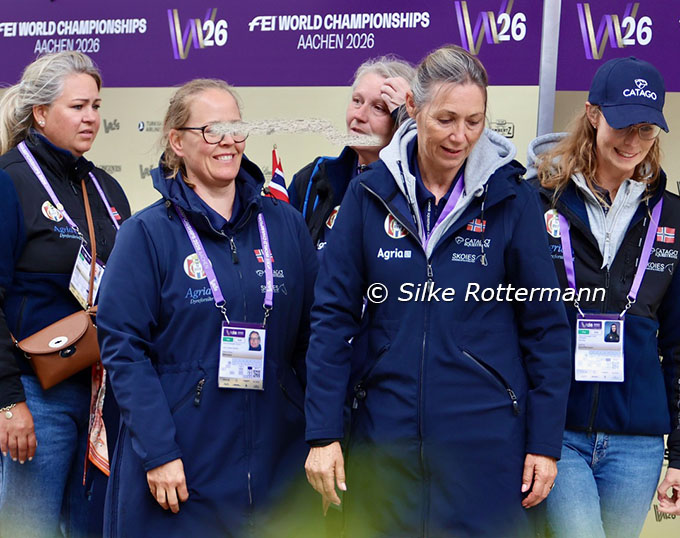
For the riders in Grades I through III, however, the stadium announcer had to repeatedly ask the enthusiastic fans to practice “silent applause”, a kind of waving that won’t potentially irritate or startle the horses of these riders, who have more severe physical impairments. Most of these horses are really very cool though, even as they likewise demonstrate great sensitivity.
A good para horse, especially in Grade 1, is the successful squaring of the circle and requires not only a special temperament, but also very thorough training. This is sometimes underestimated by non para riders when they see that these horses perform their tasks entirely in the medium walk. On the days when the show jumping competitions are taking place at the same time as the para-equestrian events in the main stadium, the contrast is sometimes striking. Here the dressage arena, with soft background music and a focused silence where you could hear the hoofbeats during the canter; there, groans and roaring cheers that reached us in the dressage arena in palpable waves.
Searching for the Exemplary Frame
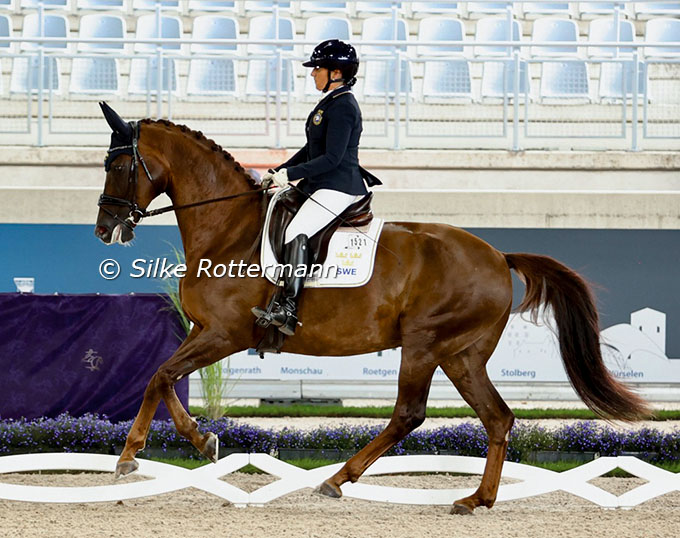
In para-sport just like at the able bodied, one can be successful with too short necks when quality gaits, great activity and flawlessness come together in a test. On the other hand, one has to wonder whether those who successfully strive to ride their horses in a classically correct posture and without artificial tension always receive sufficient recognition. In this regard, para-equestrian certainly faces similar problems in some respects as able-bodied equestrian sports because, for example, a short neck or a unsettled mouth, especially when it is the rule rather than a temporary exception, is not a minor infraction, but a fault.
Composure
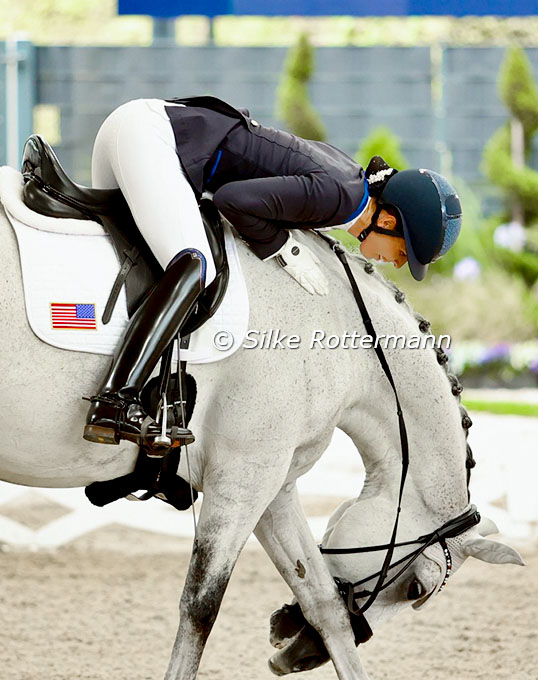
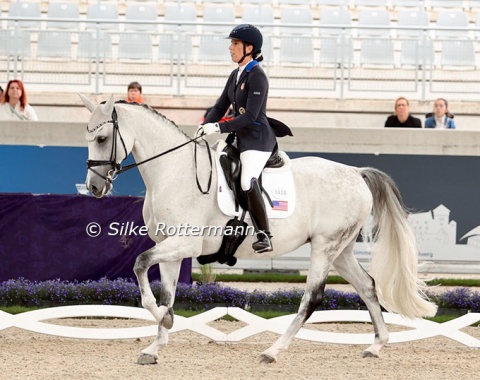
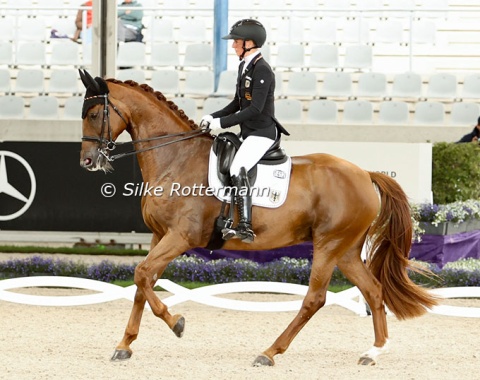
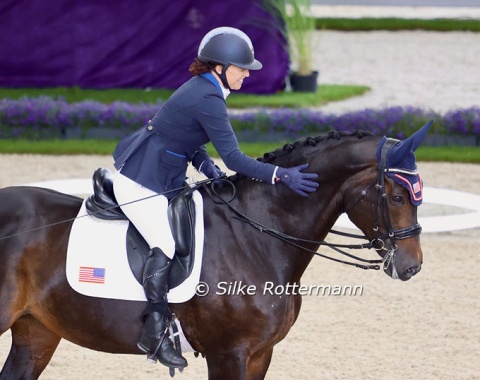
The Hanoverian mare Vianne (by Vitalis x Ramiro’s Bube), who many years ago was one of the most striking horses at the World Championships for Young Dressage Horses in Ermelo, has now been competing at Grade IV level for some time with American rider Kate Shoemaker. The stunning grey mare not only impressed with three gold medals won in convincing fashion during the second week in Aachen, but she was also visibly at ease: with herself, her rider, and the world. Whether in the warm-up arena, surrounded by the entire U.S. entourage after one of her winning rides, amidst numerous screaming U.S. fans in the stands, or serving as a “Friendly Horse”: Vianne always remained the picture of calm and took everything in her stride.
One of the lasting memories of Aachen will be the moment, at the end of her ride in the team competition, which secured the gold medal for the U.S. in a commanding victory, when, amid frenetic cheering from the stands and the Kiss & Cry area, she first stood as a statue with given reins for many seconds, staring at the judge at C, before calmly and thoroughly rubbing her muzzle against her front legs. A mare who apparently feels home wherever she is.
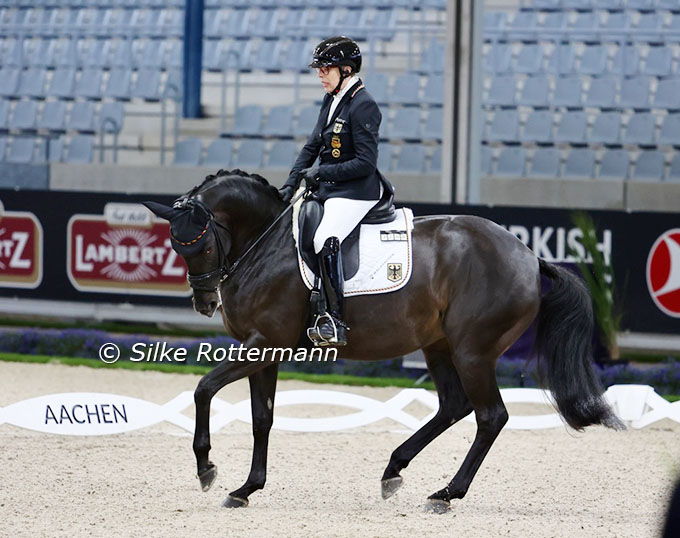
On the day of the individual competition another horse wanted to leave the arena quickly, but for different reasons. The typey Oldenburg bred Kostolany granddaughter Poesie (by Fürstenball), who, along with Germany’s Heidemarie Dresing, was among the favorites in Grade II, wanted nothing more than to get out of the arena immediately as soon as she entered it.
Standing Out
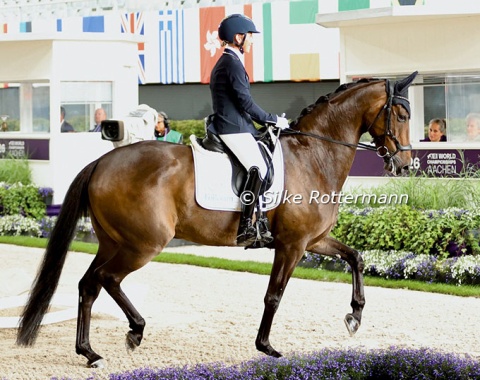
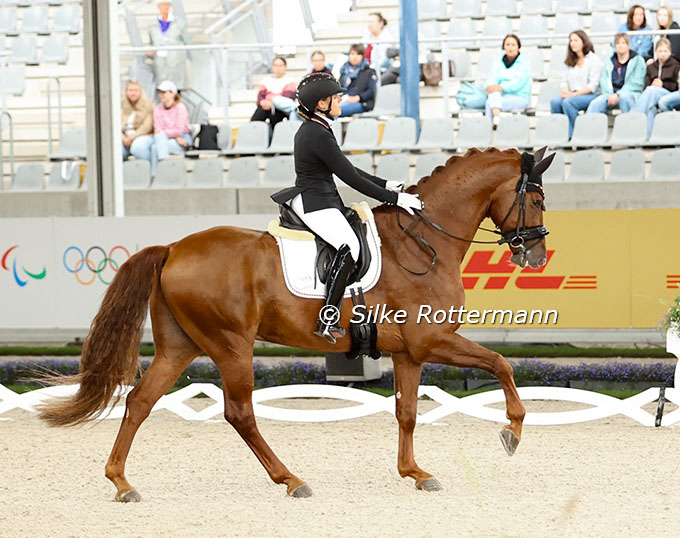
One rider, who didn’t win a medal, but showed just how much a year’s worth of experience can make a difference was Swedish Grade III rider Pam Svane, whom I had interviewed last year for Eurodressage during the European Championships when she was a complete newcomer to the para-equestrian scene. Back then, she and her talented Bavarian mare Raja (by Rock Forever x Revan), with whom she shares a very special bond, had clearly missed the freestyle final. This year not only did they place 6th in the freestyle, but they also exuded a confidence that showed they’ve found their place in this sport and are enjoying the challenge of competing.
their team debut for Germany
Time to Say Goodbye
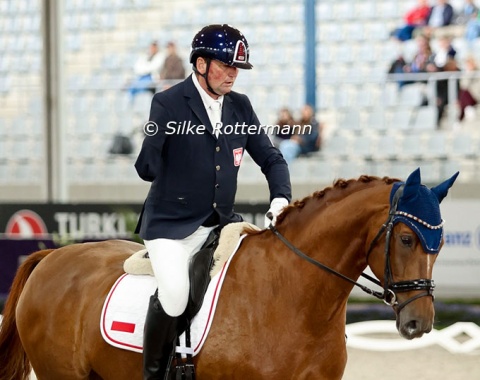
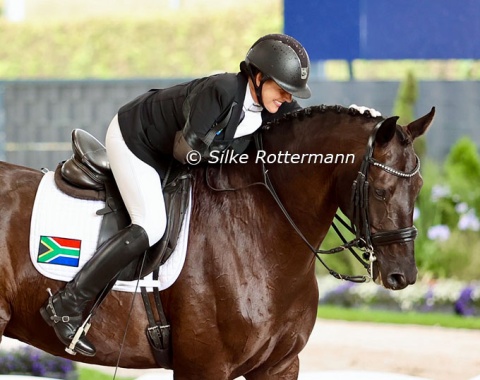
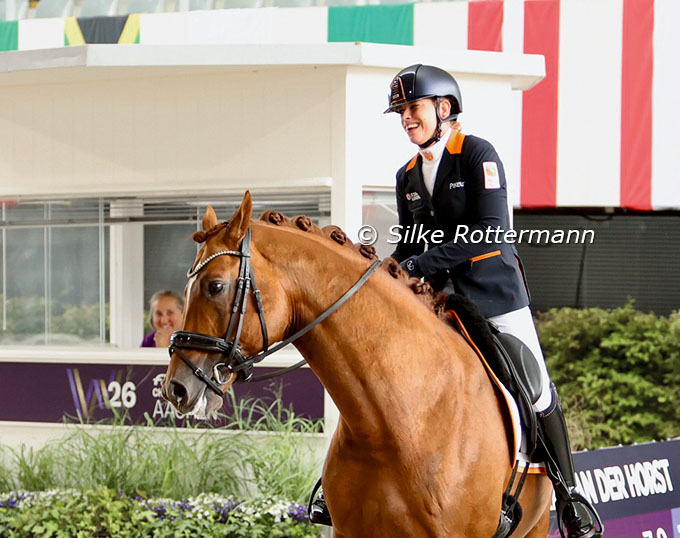
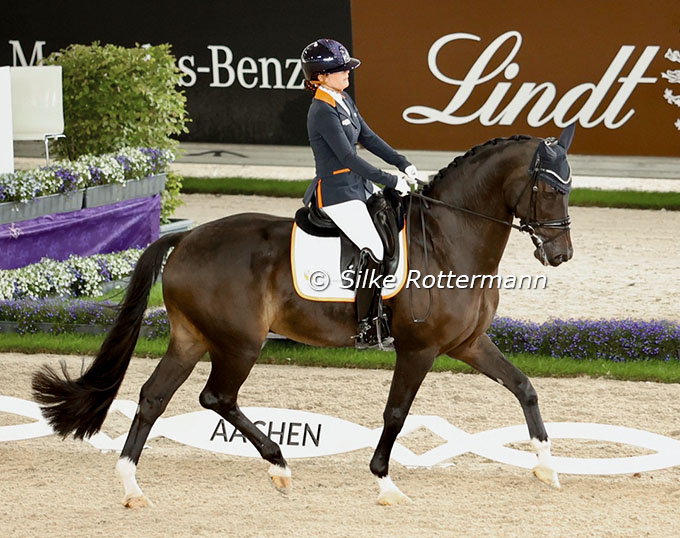
There were also tears for the Dutch rider Britney de Jong in Grade V, where she likewise rode to a bronze medal on the last day. Her 19-year-old KWPN Caramba (by Tuschinski x Krack C), who still looked fresh, made his final appearance after a long and successful career, both in able bodied competition and in para sport. To the strains of “Time to Say Goodbye,” the dark bay gelding trotted out of the stadium, and even some of the fans in their distinctive orange T-shirts couldn’t hold back their tears.
No matter what happened during the day on those amazing six days that I was able to spend at the dressage stadium, mostly behind the camera: The 60-minute drive back to Belgium, which I had previously dreaded a bit, always proved to be an opportunity to wind down from the emotions, excitement, and events of the day. At the end of the day, I always had my own “Welcome Home” moment when I arrived at the secluded Eurodressage headquarters, seemingly in the middle of nowhere and the two oldie horses there stared at me while chewing grass in their huge field, as if they were asking where I’d been To a week of exhilarating para sport which took place in the most extraordinary equestrian venue.
Welcome Home to Aachen - hopefully sooner than 20 years on!
By Silke Rottermann for eurodressage.com
Photos by Silke Rottermann and Rebecca Thamm / Rheinland’s Reiter und Pferde
Related Link
Eurodressage Coverage of the 2026 World Championships Dressage