-- Text and Photos by Silke Rottermann for Eurodressage
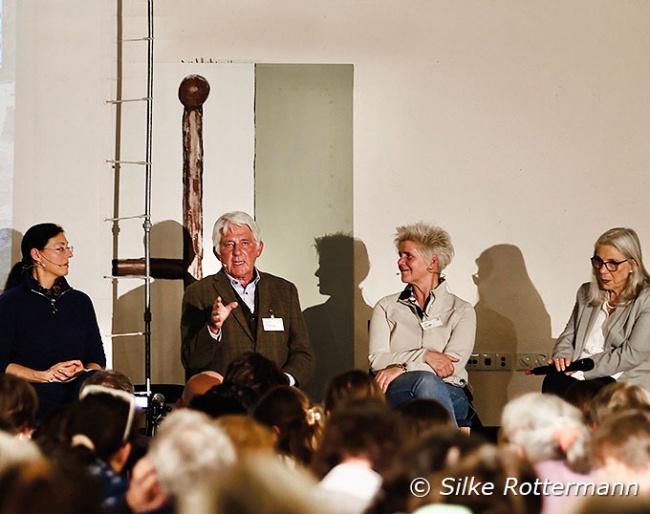
The Burgtagung is hosted bi-annually by the Horse Sport Association Palatinate at Fortress Altleiningen. This sixth edition took place in February 2026 and its traditional "podium discussion" on Saturday evenings are at the core of this highly informative educational seminar on dressage.
For the discussion some of the experts who lectured during the day return in front of the audience to discuss the motto of the event. This year that motto was, "which way leads to the future of competition sport?“
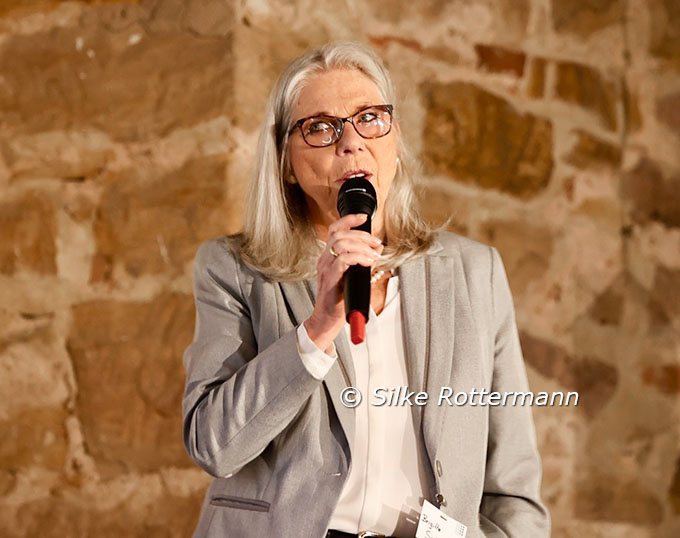
The podium consisted of the three experts and was moderated by Brigitte Seidler, the initiator of the Burgtagung:
- Martin Plewa, riding master, former international eventer and long-time German national eventing coach whose riding was stamped by several classical riding masters and who is a strong advocate for correct riding.
- Uta Gräf, renowned dressage trainer, former international dressage rider and clinician. Together with her husband she runs a training stable not far from the event location.
- Anja Beran, renowned classical dressage trainer who runs a training stable in Bavaria.
Is there a Future for Competition Sport?
With Burgtagung meaning "meeting at the fortress," the knightly setting of this event couldn't be more fitting with the podium discussion held in the crowded "Knights Hall" of the fortress, which also served as dining room.
The discussion kicked off with a video sequence of a short program that a German TV channel had recently done during the Neumünster CDI-W, focusing on the fact that the number of shows is going down, also in Europe and the reasons for it.
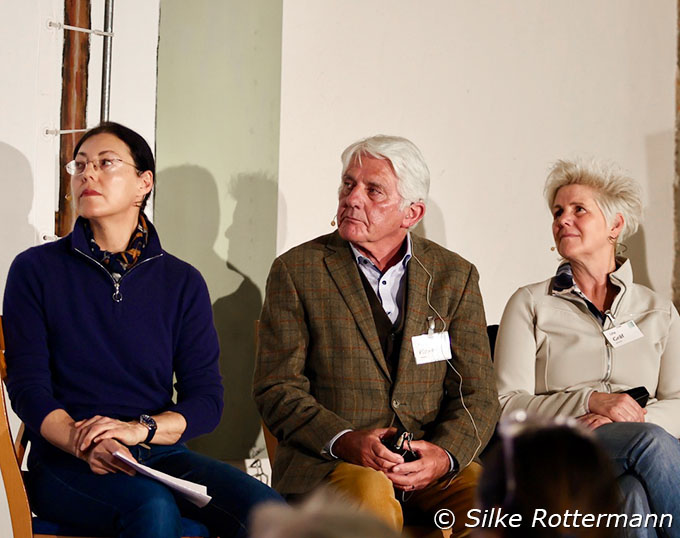
„The gap between amateurs and their horses to the professionals is too big. Good riding is not enough anymore, so they do not like to compete anymore," Gräf said.
Anja Beran joined Uta in saying, "the sport follows its logic and it is that of a commercial spiral. The way competition sport is going today we distance ourselves from the idea how far do I get with a certain horse. Instead horses get tried out and sold again if they are not successful enough."
While dressage is a discipline in which there is a lot of money and which usually requires considerable assets to be successfully practiced, eventing still holds the image that rags to riches stories might be possible in equestrian sport, namely to succeed without an absolutely outstanding horse.
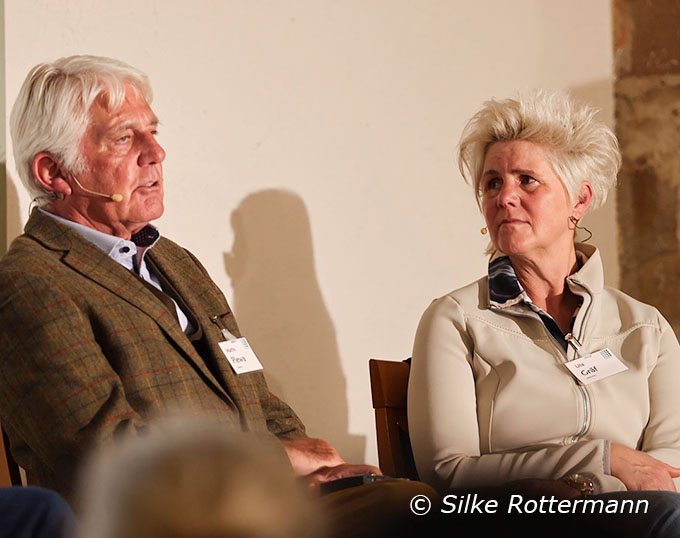
Plewa stressed that although less than 2% of all riders in Germany practice eventing, the success internationally and at championships is outstanding. "This is because in eventing we have a very good system which enables us to put the quality of riding in the focus," Plewa stated. He added that he is a big fan of competition sport because "a competition rider submits himself to rules and faces up criticism."
Nonetheless he admitted that the public image is essentially determined by top sport.
Quality of Horses Comes Into Play
Uta Gräf is one who proved time and again that you can be successful up to Grand Prix level with comparatively average horses who were extremely well trained and correct in their way of going. However, she added that "I just love to train horses who are motivated and like to work with me well. Then it has no relevance if this is a very expensive and talented horse or is an average one.“
Uta admitted that the trap in dressage is that "judges need to be very well schooled because what they want to see get exercised by the riders."
Plewa was completely in unison with that statement and left no doubt that the judges play a giant role for the development of the sport and therefore carry a huge responsibility.
Pressure on Judges
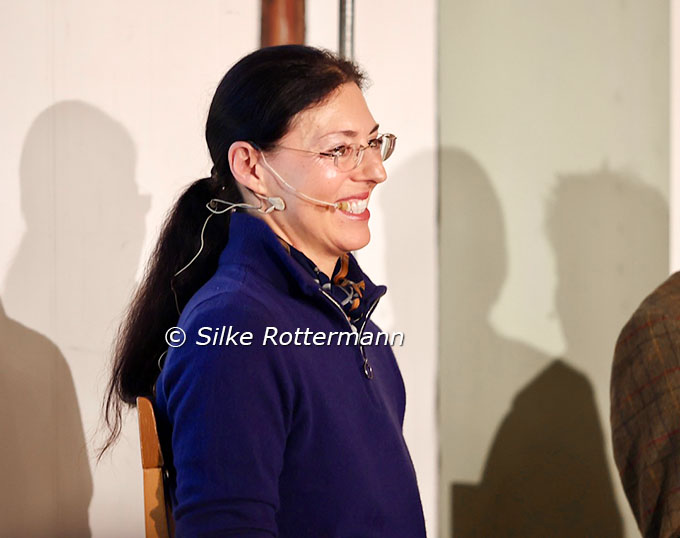
"The best judges’ education is useless if the judges are not brave enough to put them into practice," Beran said, hitting the nail. Her statement prompted the old, but still very relevant question, which continues to be a problem point for the FEI. "Why are judges invited to shows by the organizer and not allocated randomly? It is the first big thing which should be changed.“
Anja Beran also focused the attention on the results if judges don’t do their job properly. "I am the last address if horses are over-asked and have been to several trainers before. Those horses have been trained too much, too fast, too early and when they come to our stable we start from scratch and gymnasticize them. I love to find out where is the problem. For every problem there is almost always a solution.“
Shared Responsibility
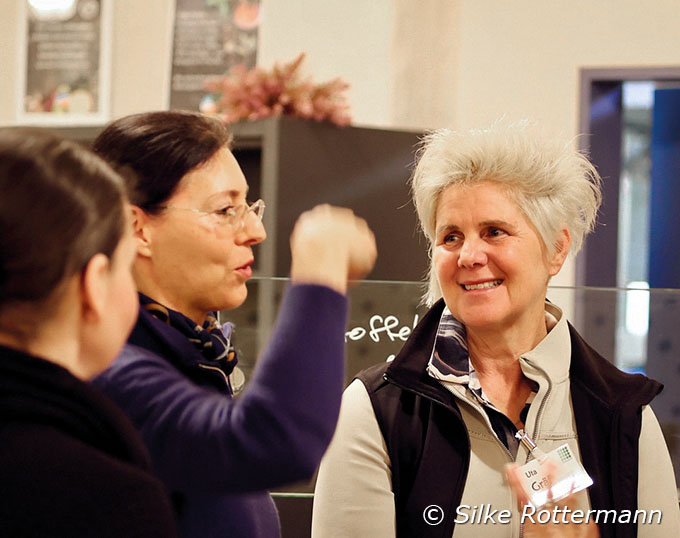
To get there it is necessary that "trainers, riders and judges need to have the same idea about what is good riding," Plewa concluded. "We should not point a finger at certain groups. We all carry responsibility for the development of equestrian sport. We need to school the view for the good, instead of always putting the finger on the bad. We need to speak one language.“
Plewa, the former head of the renowned Westfalian Riding and Driving School in Münster, expressed the hope we are all living for. "The good and harmonious presentation will prevail. There is a resource of people who are thinking the same way like we do."
Continue reading: Burgtagung 2026: Uta Gräf on Riding Forward-Downward
Related Links
Today for Tomorrow - A Weekend Dedicated to Good Equestrian Sport at the 2024 Burgtagung
2024 Burgtagung: Fair and Delightful Dressage Training with Uta Gräf and Anja Beran
2024 Burgtagung: Uta Gräf and Anja Beran: "If the Basis is Correct, It's Easy for the Horse"
2024 Burgtagung: "Everything Was Better in the Past, Wasn’t It?"
2024 Burgtagung: Anja Beran - "Schooling The Eye"