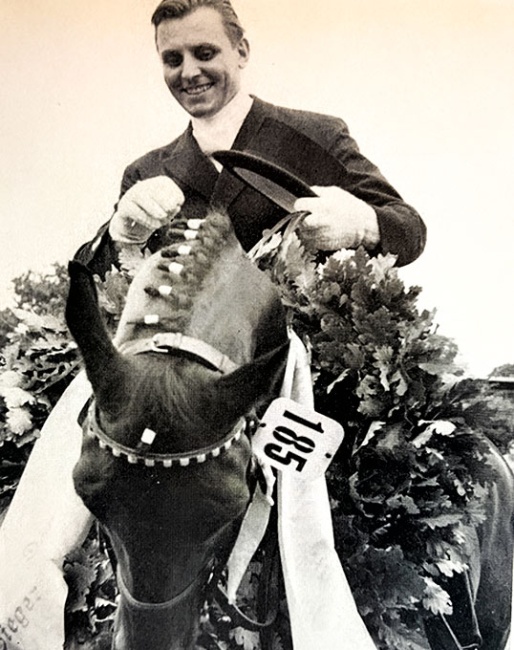
In grateful memory - by Angelika Frömming (née Jucho) and Karl-Heinz Streng
On 25 August 2026 Uda Nesch passed away at the age of 95. He was a man who had a profound influence on countless riders at the Dortmund Riding Club and beyond, including us, both as riders and horsemen, for more than six decades.
Born in Drawehn, Pomerania, in 1931, he already had a remarkable equestrian biography when he joined the Dortmund Riding Club at the urging of then-chairman Günther Jucho in July 1958 at the age of just 27. From that point on, it became his lifelong place of work and equestrian home.
Released from Russian captivity at age 18, Udo began an apprenticeship as a riding instructor in Verden that same year. After stints in Hoya and Warendorf, he began working at the Dortmund-Bodelschwingh Riding Club in 1954 and made a name for himself as what he always remained and what has become a rarity today: an exceptionally versatile trainer of both riders and horses..
At Bodelschwingh Udo rode himself into the spotlight on the post-war German equestrian scene with horses owned by Otto Schulte-Frohlinde, who later became known as the owner of the legendary Grönwohldhof. In 1957 at the tender age of 26 Udo was awarded the Golden Riding Badge for six S-level victories in dressage on the chestnut Kurprinz and eight S-level show jumping victories on Sambesi..
Indelible Influence
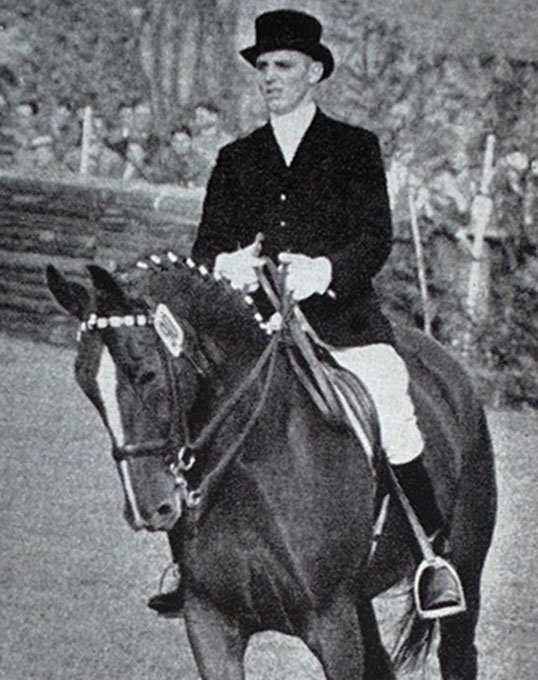
Kurprinz, 1957 (Source: Magazine of German Riding
and Driving Association)
Everyone who rode with him at the club, from beginners to successful competition riders, quickly came to know Udo Nesch as an instructor who shaped his students into riders with great consistency; who could rely on a broad equestrian foundation, while also instilling a deep respect for the horse. Throughout it all, he was always a true friend to us, whom we held in high regard. Udo was more than just a riding instructor and trainer; he cared deeply for both his two- and four-legged charges.
Versatility
Udo Nesch’s training approach was a product of his time, which was still strongly influenced by cavalry training. Early specialization, something which is now the norm for horses and riders today, was not the standard back then, neither in breeding nor in sport. Quite the opposite, in fact. Riders and horses were to be trained on as broad a foundation as possible.
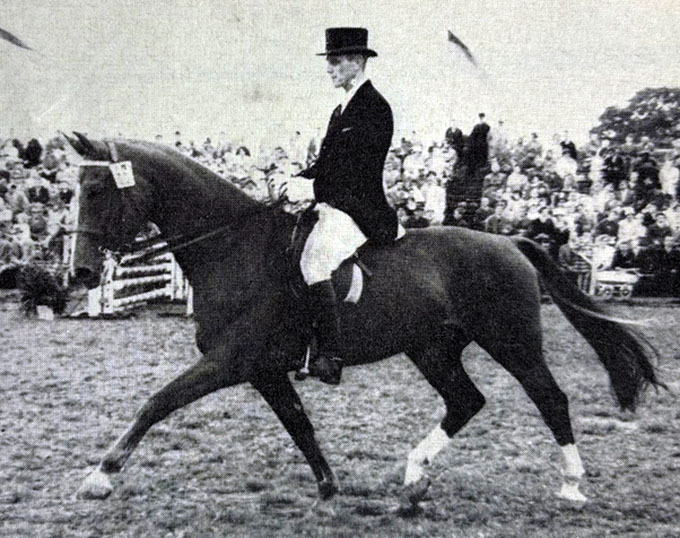
(Photo © St.Georg)
Thanks to his approach, we, too, gained a very broad foundation from which we benefit throughout our riding careers. A welcome byproduct of this type of classical training for both horse and rider was that each of us could ride any of our horses and compete with them at shows. This even applied to friends who wanted to experience competing in a show just once.
Will to Win
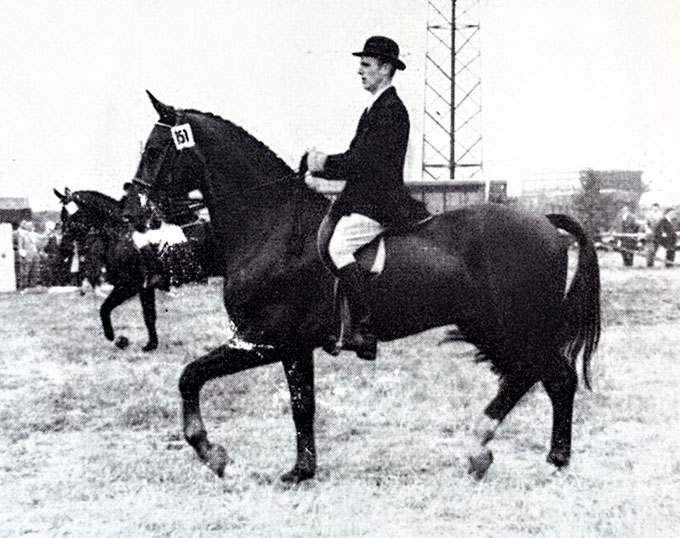
that won Inter I and S level hunting aptitude tests
(Photo © St.Georg)
Udo was not only an outstanding instructor who convincingly lived by and passed on the right values; he also continued to regularly demonstrate his skill in both dressage and show jumping, right up to the highest level. After his first major successes with Kurprinz and Sambesi in the 1950s, he went on to achieve further great successes in both disciplines for the Dortmund Riding Club with horses owned by Günther Jucho and other club members.
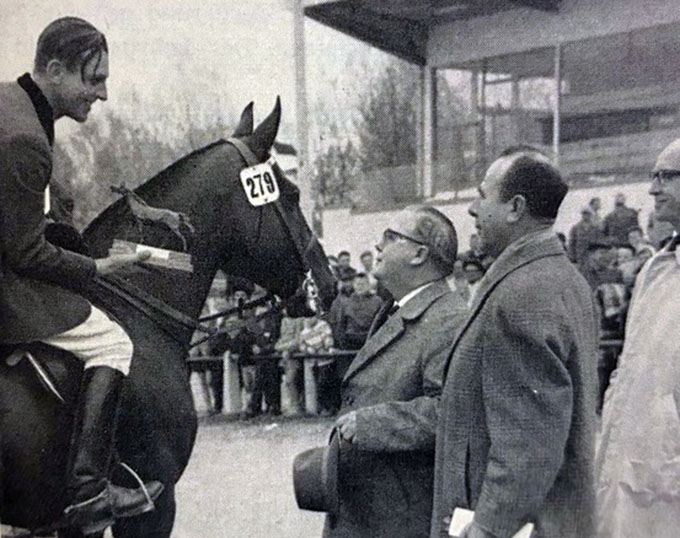
at the
international show of Mönchengladbach,
early 1960s
(Photo © St.Georg)
Udo Nesch was indeed universally liked and his achievements were always acknowledged by his colleagues without envy, which is not the norm in professional sport.
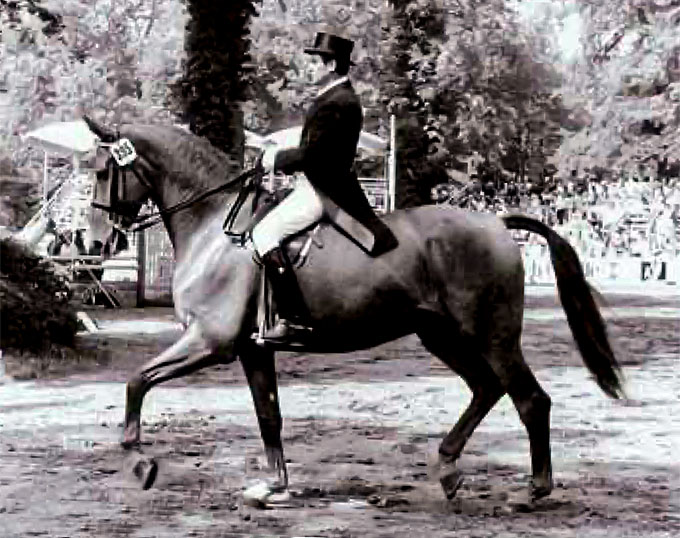
Woyzeck's Trainer
(Photo © KRV Dortmund)
Udo was able to present Woyzeck internationally for the first time as a 9-year-old in the spring of 1975 at the Dortmund Indoor Horse Show, where he naturally attracted attention with his talent for piaffe and passage and was immediately purchased for Harry Boldt by one of his patrons. Udo’s thorough training, Woyzeck’s extraordinary talent and Harry’s skill ensured that the new pair was able to return home from the European Championships in Kiev just a few months later with two medals.
A Trainer of Horse and Rider
Looking back, one certainly tends to highlight the deceased’s great achievements in training and competition, which also included the training of numerous riding instructors and master master riding instructors for which the German Equestrian and Driving Association honoured him with the Golden Badge of Merit in 2000.
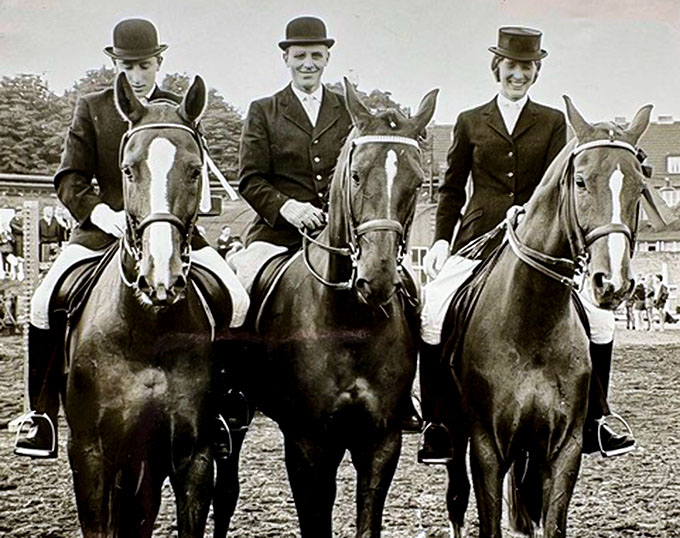
Udo Nesch with Karl-Heinz Streng (left)
and Anke Frömming (right)
(Photo © Frömming)
We are saddened by Udo’s passing, but we are both also infinitely grateful for everything he taught us, in terms of horsemanship and character. He had a profound influence on us and countless others in the equestrian community.
May the values he stood for in equestrian sports continue to shape it.
Photos: Private Archive Angelika Frömming / Sankt Georg Magazine
Related Links
Angelika Fromming: Half a Century of Dressage
Woyzeck: A Star Who Was at Peace with Himself
From Flying Past to Flying Change - Part IV: On Thoroughbreds Losing Relevance in Dressage
An Evening Dedicated to Classical Dressage and Harry Boldt