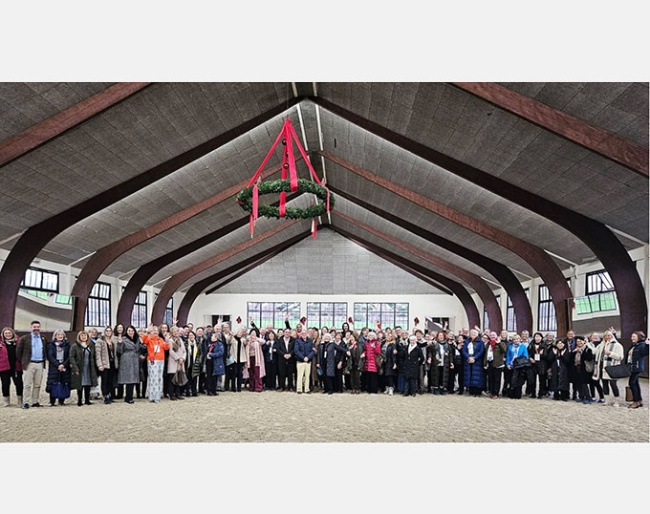
-- Text by Hans-Christian Matthiesen, IDOC President
Approximately 80 active participants attended the FEI Dressage Judges Seminar held in Frankfurt on 18 - 20 December 2025. The programme covered a wide range of topics, and participation was highly engaged, with lively and high-level discussions throughout.
On Bias
The first day began with a presentation on bias in judged sports disciplines (Course Director: HC Matthiesen). In light of the FEI’s new project focusing on the analysis of bias and judging practices among officials—intended to form the basis for further evaluation and future education—this topic was highly relevant. Bias is a human factor; we are influenced by discussions and content from the internet, social media, and other forums, as well as by direct influence through face-to-face discussions with riders, trainers, and colleagues. While bias cannot be completely avoided, it can be actively addressed by striving to minimise its impact and by setting high standards through education and increased awareness.
The many different forms of bias were reviewed, followed by discussions on how they can be mitigated and continuously evaluated against the FEI judging criteria. The discussion was open and constructive, and it became clear that this topic should continue to be addressed in future courses. Recognising that bias is a human factor—even within a professional framework—is an important understanding. Parallels were also drawn with other sports in which judging plays a central role. In addition, the potential future role of AI as a tool to help reduce bias was discussed.
On Lameness
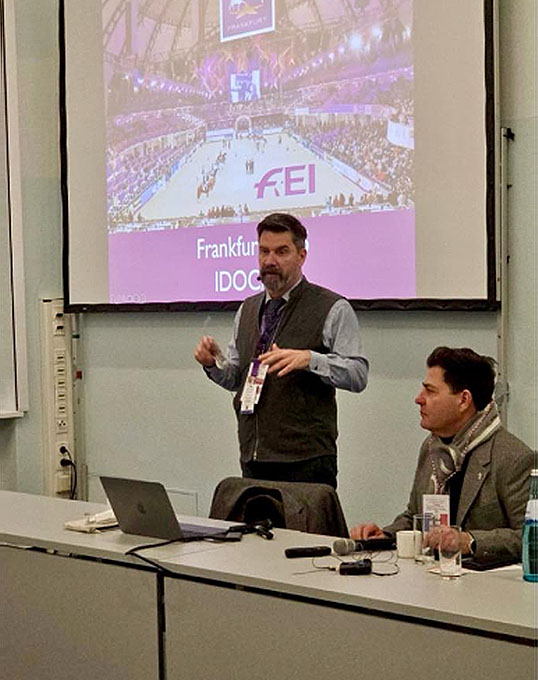
Numerous video examples were shown, including competition footage where horse–rider combinations were either eliminated or allowed to continue! With the increasing possibilities of modern technology and “signal alert buttons” in systems such as BlackHorseOne, it is essential that officials stand together and work collectively to further strengthen horse welfare. AI systems (eg SLEIP) was explained and discussed as helpful tools for the future.
On the Walk
The final presentation on the first day addressed the walk, entitled “A Video Walk-through of Judging the Walk” (HC Matthiesen). Acknowledging that the judging of the walk is not always transparent or easy to reproduce—or to explain to others—special focus was placed on this movement. Several horses with different weaknesses or irregularities were shown from multiple camera angles and perspectives and discussed in an open forum. This is an area that requires further work, and the discussion was lively, covering both the quality of the gait and potential forms of bias in judging. There was broad agreement that efforts must continue towards achieving a more consistent approach to judging this movement.
Video Assessment
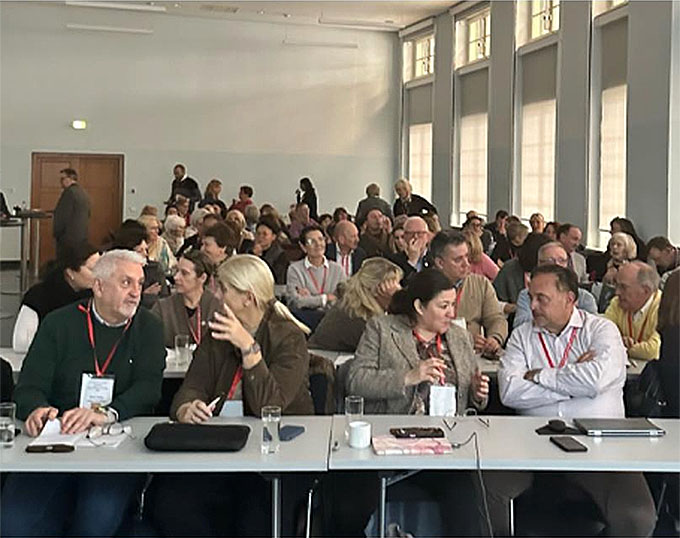
The following day focused on “live” commentary of competitions, which, in addition to the Top 12, also included the Nürnberger Burg-Pokal and the Louisdor-Preis—both highly prestigious competitions. Commentated by HC Matthiesen and Raphael Saleh.
IDOC General Assembly
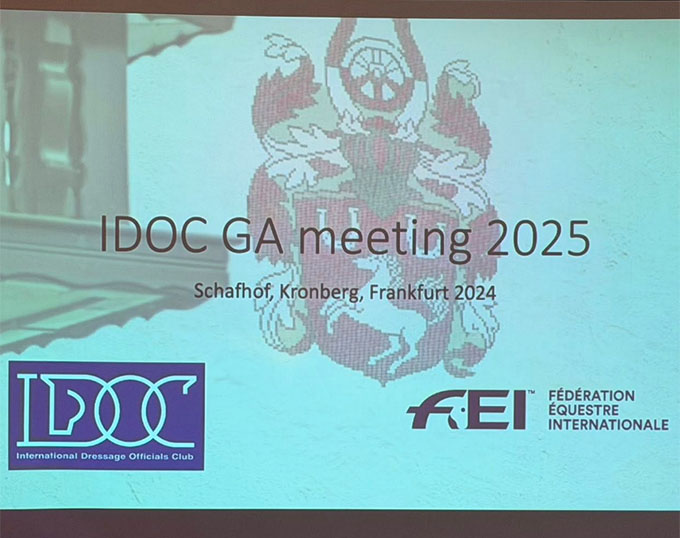
"Fifty Shades of 6.5"
The final day of the course began with further “live” commentary by Rapahel Saleh, followed by a lecture by Katrina Wüest entitled “Fifty Shades of 6.5.” This presentation was based on the observation that approximately 80% of awarded marks fall between 6 and 7, and that there are many different reasons for arriving at a score of 6.5. The lecture was supported by various video examples, enabling discussion and contextualisation. A constructive and engaging debate followed, including among the course directors, focusing on the different examples and their analysis.
Related Links
IDOC: "Have the Scores Gone Down? Maybe They Have"
Hans-Christian Matthiesen: "On the Importance of Continuing Education and In-Person Meetings for Officials"
Hans-Christian Matthiesen: "Sport and Politics Should Go Hand in Hand"
IDRC/IDOC/IDTC Joint Letter: "A Wake Up Call for the Vulnerability We Now Face"
IDOC Meets with Dressage Activists and Experts at 2022 General Assembly in Frankfurt
Matthiesen's 2021 End-Of-the Year IDOC Message: "We need to Take More Part in Decision-Making Process"
Matthiesen's 2020 End-Of-the Year IDOC Message: "No One Can Stand Alone in the World of Dressage"
Matthiesen's 2019 End-Of-the Year IDOC Message: "We Must Act United"
Hans Christian Matthiesen: "Eliminate the Need for Band-Aids for Dressage Judging"