
-- Text and Photos © Silke Rottermann for Eurodressage
Aachen, the ancient imperial city whose impressive cathedral has been the site of the coronation of German emperors for more than six centuries, offered an attractive cultural program during the 2026 World Championships on Monday 17 August 2026.
One event that was presented as a special treat for interested horse enthusiasts was the 6th Colloquium of the Bibliotheque Mondiale du Cheval. For organizer Xavier Libbrecht, a renowned French equestrian journalist and director of the library based at the University of Caen, it was clear that this edition would take place in Aachen specifically in conjunction with the World Championships, with a German theme as its central focus.
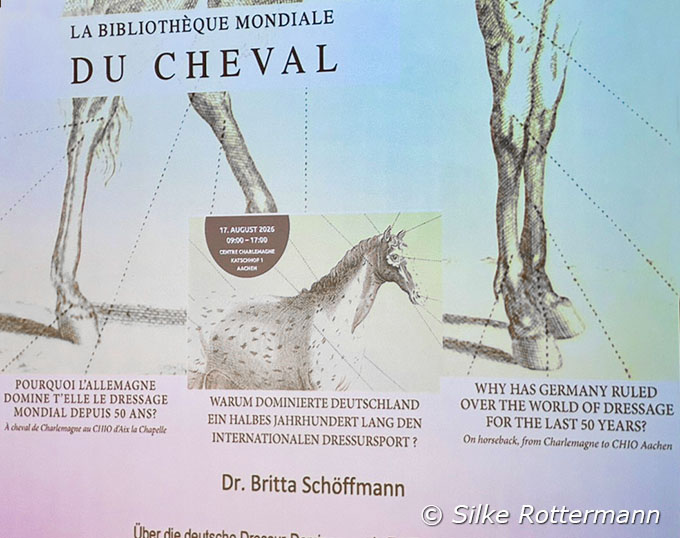
Why has Germany dominated the sport of dressage for more than 50 years? was ultimately the justified central question that the high-profile speakers addressed from various perspectives. The venue chosen for the colloquium was not the Soers, but the Centre Charlemagne in the heart of Aachen, not far from the cathedral. This modern museum of Aachen’s history set the tone for colloquium attendees right in the foyer. An exhibition titled “Tradition, Innovation, Emotion—100 Years of Aachen” illustrated a century of the CHIO Aachen through numerous photographs depicting the unforgettable heroes of this “equestrian show of shows.”
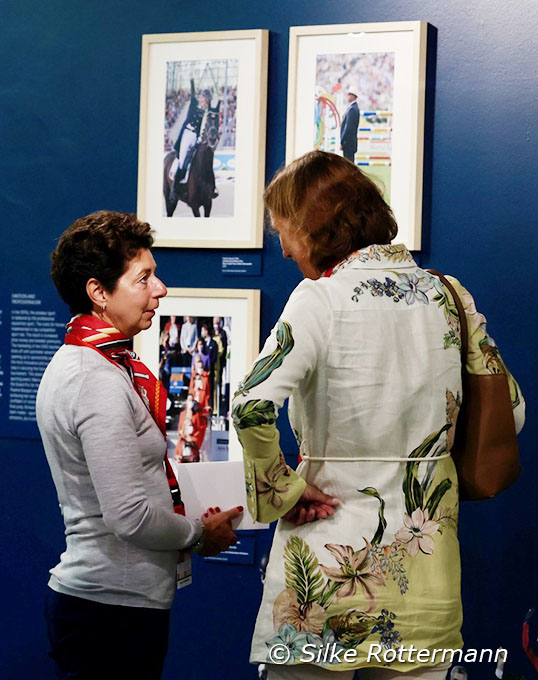
Peters at the exhibition
Dr. Doris Beaujean, the head of the CHIO Museum and archives, who is also responsible for the exhibition in the foyer, provided an overview of a century of CHIO Aachen, which has been held since 1924. Even back then the show (which would soon break every record) included the disciplines of show jumping, dressage and driving. The latter was still held as full-fledged marathon drives covering distances well over 100 km, as Beaujean told the astonished audience. She attributed Aachen’s special status in the worldwide equestrian circuit to its exceptional audience, which was regarded from the very beginning as knowledgeable, fair and enthusiastic, a reputation it has maintained unreservedly to this day. “Aachen is contemporary history, but above all, Aachen is Aachen,” Beaujean summed it up. This has also included, since 1953, the now legendary Farewell of the Nations, which concludes CHIO week annually following the Aachen Grand Prix.
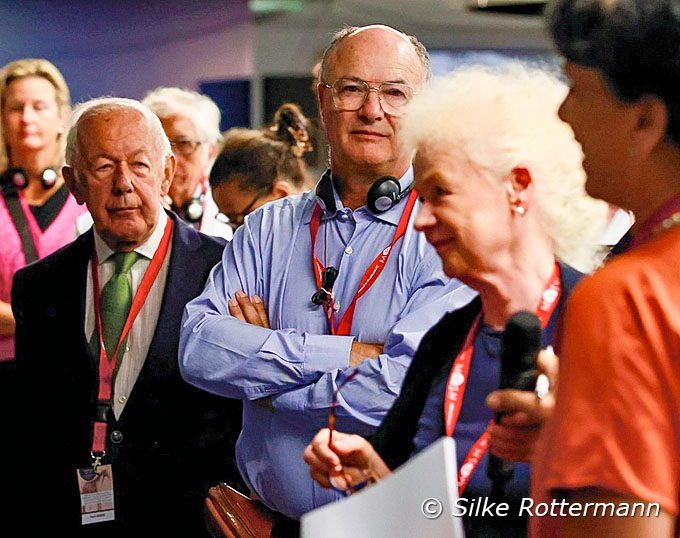
photo exhibition of 100 years of Aachen
Dr. Britta Schöffmann, former deputy editor-in-chief of the now sadly defunct, long-standing equestrian magazine Reiter Revue, has primarily made a name for herself as an author of specialized books and is regarded in Germany as an expert on classical dressage. Having enjoyed success even at Grand Prix level, she was certainly one of the first people who came to mind when considering to deliver the opening lecture on the topic. Schöffmann began her presentation with some raw statistics, impressive numbers: 48 Olympic medals, including 24 gold and 41 World Championship medals, 21 of which were gold. This is the unprecedented record set by German dressage riders since these championships began. The picture is similar for the various junior championships.
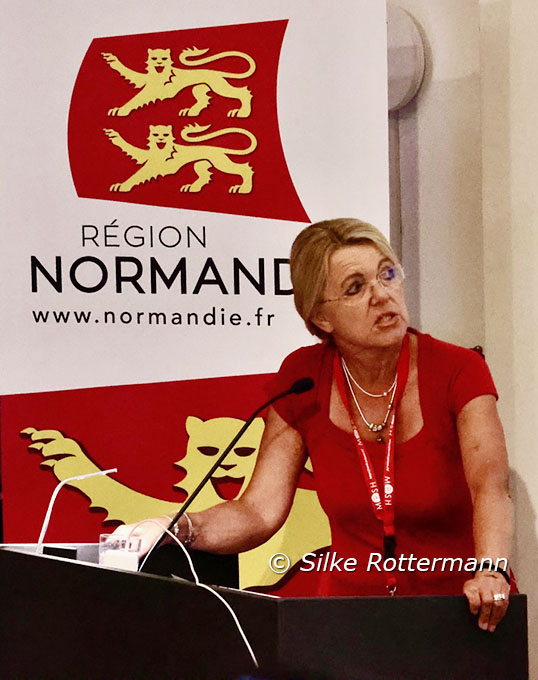
Finally, Schöffmann got to the heart of the matter and presented a total of seven aspects that, in her opinion, are crucial to Germany’s enduring success in dressage. “However, this can only be an attempt of an explanation, because there are so many aspects,” she emphasized.
The most important factor is certainly the German riding tradition outlined earlier, for which Schöffmann has rendered outstanding service in securing its designation as a UNESCO Intangible Cultural Heritage. Of similar importance, however, is German horse breeding, which, thanks to “the founding of the state-run main and regional stud farms 150 years ago, and close collaboration first with the cavalry schools and then with equestrian sports has developed into a breeding system that serves as a global model.” The combination of breeding and training expertise has made German horses a major export success.
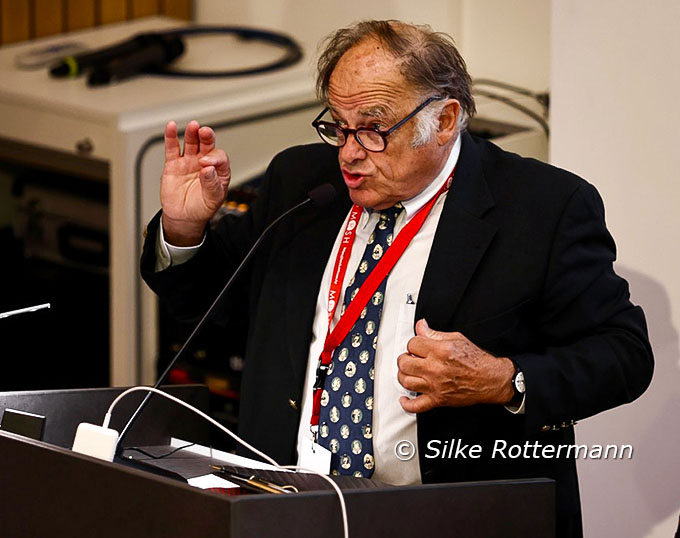
In Germany, the first structures for professionals run back as early as the 1920s / 1930s. The importance of equestrian training in Germany is demonstrated not only by the fact that professional equestrian training has been state-recognized and regulated since 1969, but also by the fact that there are now five specializations covering a wide range of equestrian disciplines.
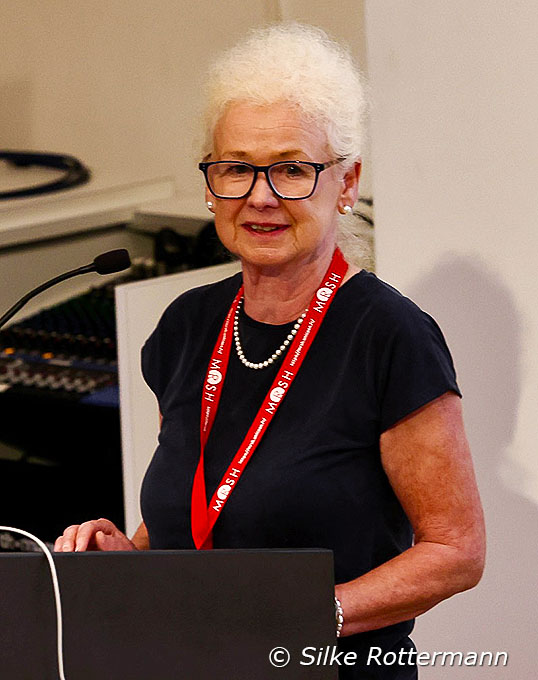
She did not conclude her insightful lecture without a glimpse into the future: „And even though dressage as a sport has a lot to do with meticulousness, systematic approach, discipline and ambition, in other words, typically German traits, I would like to see a little more return to French lightness.” She added: “And against the backdrop of increasingly vocal opposition to competitive dressage, Germany, as the (still) dominant nation, bears a special responsibility, we all do as riders.”
Finnish figurehead Kyra Kyrklund, who served as a sort of host between the individual segments, recalled her early days when there was no training program for riding instructors in Finland and she had to go to Strömsholm in Sweden. “After that, I went to Walter Christensen in Germany; he was a very good teacher. And when I went back to Finland and ran my own stable, I always said, ‚Tidiness is a must!’” Kyra smiled. “In Germany, there are simply many dressage stables with qualified riding instructors. In Finland, on the other hand, many people ride alone at home and might have just two hours a month. Ideally, you should ride under supervision 365 days a year.”
Rosie noted that Germany not only wins gold in the arena, but is also an economic gold mine in the horse trade sector. According to Rosie, the annual revenue of the German horse industry amounts to some 6.7 billion euro, which is comparable to that of the German Bundesliga (soccer leagues). Of that total, 4.1 billion alone goes toward horse trade, breeding, and riding instruction; more than 300,000 people in Germany make their living from the horse industry, and there are also many self-employed individuals and people in part-time jobs specifically in this sector. The sheer scale of these figures alone made it clear to the audience just how significant equestrian sports are to Germany’s economy.
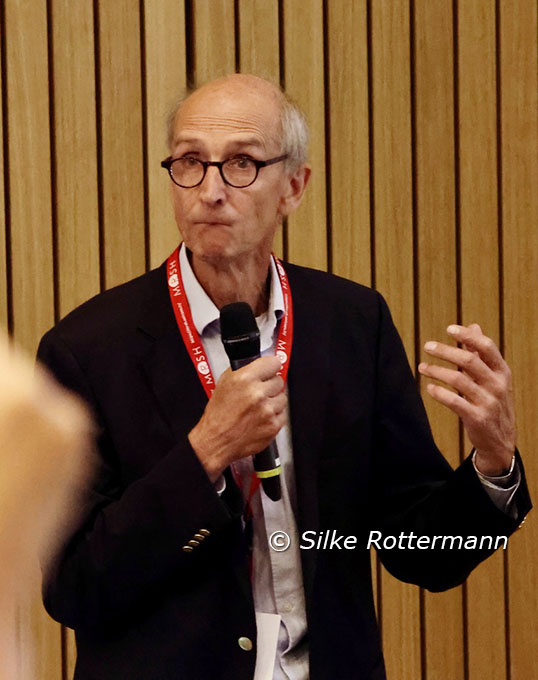
In its place, Dirk Willem Rosie read aloud an AI-generated text on the topic. Even though it is astonishing what AI is capable of today, it seemed questionable to me personally whether this type of text was necessary in that context—especially since some people mistook it for Professor Döring’s text.
Read Part II here: Why Has Germany Ruled Over The World Of Dressage For The Last 50 Years? Part II
-- Text and Photos © Silke Rottermann for Eurodressage
Related Links
Eurodressage Coverage of the 2026 World Championships Dressage
Vornholz Stud: Birth Place of Post-War German Dressage
The History of British Dressage: "I Thought We Would Get There...In 100 Years!"
The Shaping of Piaffe and Passage by Fashion, History and Genetics: Part I
History of the White Breeches - Why White?